
John Rogers Airfield
If you stood outside the gates of Naval Air Station (NAS) Barbers Point 40 years ago, you would be surrounded by thousands of acres of sugar cane fileds and to the north thousands of acres of pineapple. Barbers Point Naval Air Station was the center of massive agricultural growth and commerce.
Set up on 3800 acres of land here in Kalaeloa (Hawaiian for “the long point”). Barbers Point Naval Air Station was commissioned in 1942 and at its peak accommodated 6,500 servicemen and their families. Known as “The Crossroads of the Pacific” it was at one time the largest U.S. military base of its kind in the entire Pacific theater.
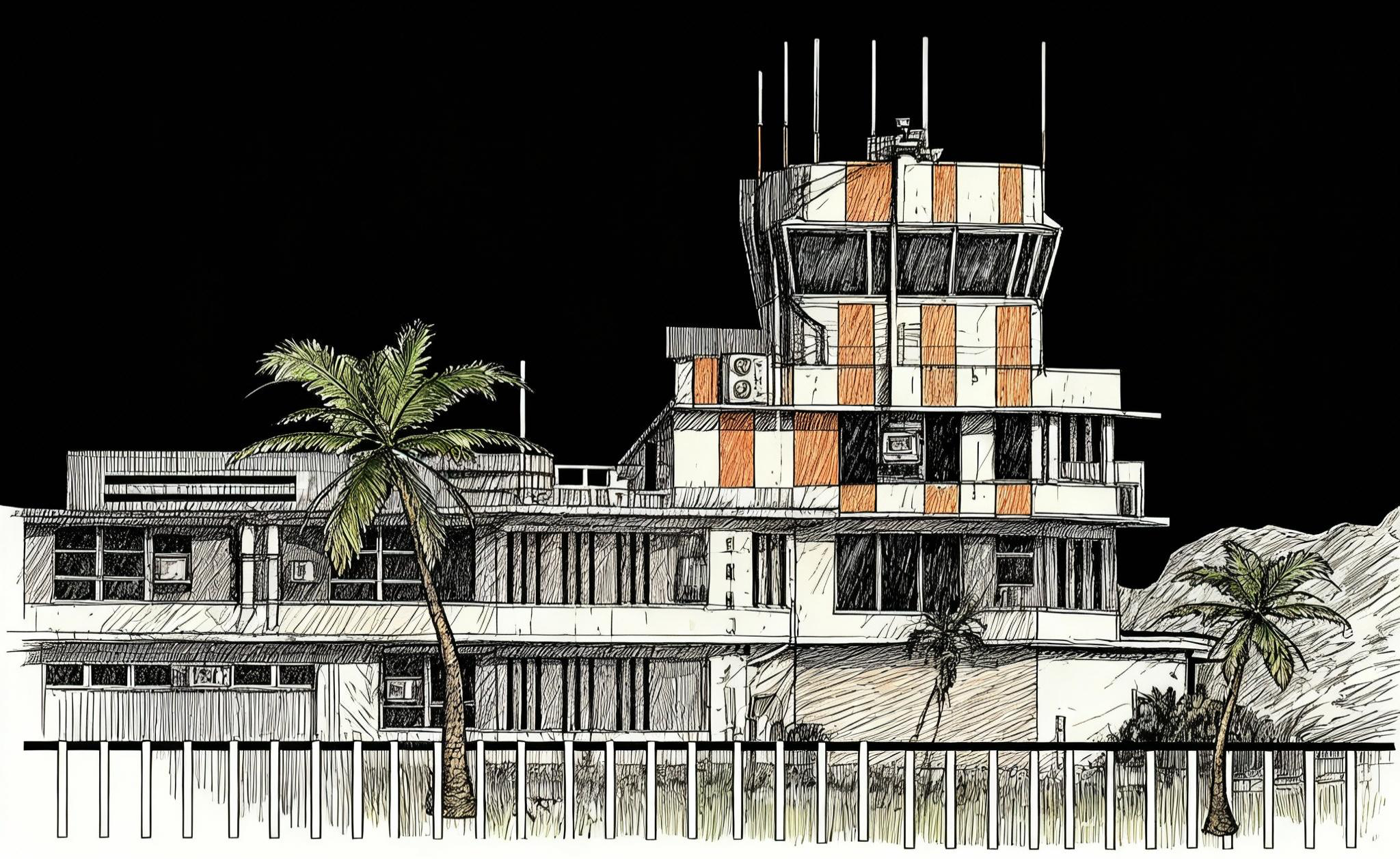
Air Traffic Control Tower
Known most famously for the P-3 Orion (submarine hunter) aircraft that were based here for decades, NAS Barbers Point played strategic roles in World War II (December 8, 1941-1945) the Korean War (1950-1953) and the Vietnam War (1955-1975). Due to budget considerations in the ‘90’s, a federal program known as “Base Realignment” and “Closure action”, inevitably led to the closure of NAS Barbers Point in 1999 when land ownership was turned back over to the State of Hawaii.
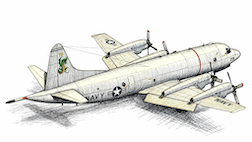
P-3 Orion - Submarine Hunter
On July 1, 1999, the State officially permitted the previous naval operated runways for civilian use, and since, multi-use due to the Coast Guard being co-located on the airfield. The Coast Guard Station here at Kalaeloa has always, and very likely will always, remain on the airfield because of its strategic importance to search and rescue in the Pacific.
For its first few years, the airport was a ghost town servicing GA and hobbyists. However, change was coming.
The city of Kapolei, planned as the “Second City” of Oahu since the ’50s, was and continues to growing rapidly. Though nothing on the island is too far from anywhere else, increased road traffic was becoming an urban planning problem. To reduce congestion and ease some of the strain of Honolulu, Kapolei was envisioned as a self-contained area on Oahu’s west side, boasting housing and business development, and at the time, a secondary consideration as an airport and a terminus for the light rail system. Now called the “Skyline”, Honolulu’s rail system is operational and should be completed by 2030 and run from Kapolei to downtown, Honolulu.
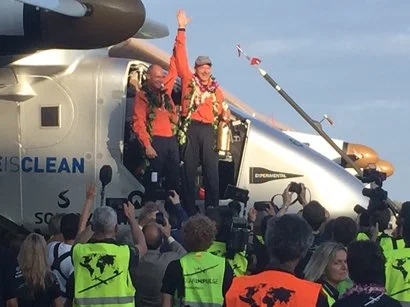
Celebrating their non-stop solar powered flight from Japan to Kalaeloa
Bertrand Piccard and Andre Borschberg